LED Warehouse Lighting: High Bay and Triproof Fixtures for Storage Facilities
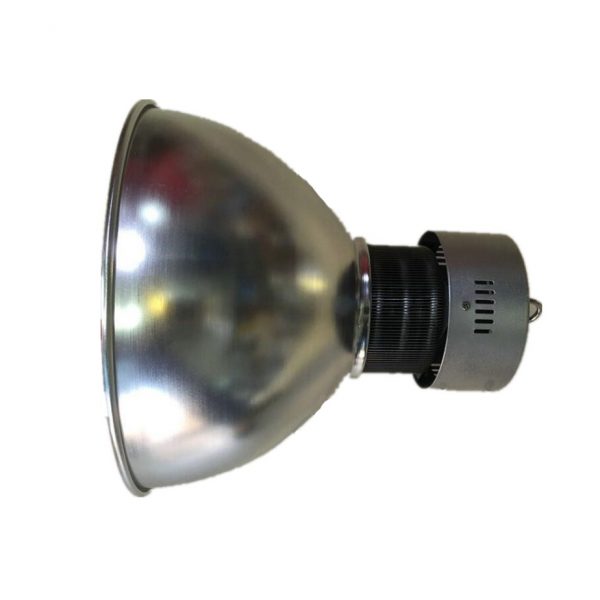
Buying LED warehouse lighting is rarely about a single fitting. A working warehouse has high racks that need concentrated light down narrow aisles, open bulk storage that needs even coverage across the floor, loading docks exposed to weather, and damp or wash-down corners where an ordinary fixture will fail within a season. For distributors, wholesalers, electrical contractors, facility managers and municipal procurement teams, the practical question is how to specify one coherent lighting package that covers all of these zones with predictable lead times and a maintenance load close to zero. BLUESWIFT, the lighting brand of Guangzhou Blueswift Electric Co., Ltd., manufactures UFO high bay and triproof fixtures for exactly these mixed-environment projects, and supports buyers with product selection and quotations before a single carton is shipped.
LED Warehouse Lighting as a System: High Bay for Racks, Triproof for Damp Zones
The most common mistake in a warehouse retrofit is treating every area the same. Aisles between high racks behave very differently from the open floor around them.
High bay zones. Over racking, packing lines and open storage with high ceilings, the workhorse is the UFO LED high bay in 100W, 150W and 200W versions with a DOB driver and IP65 protection. The DOB (driver-on-board) approach reduces component count, which matters for buyers who maintain their own stock and want fewer failure points. IP65 means the fixture is rated for indoor and outdoor use, so the same model can be deployed under a canopy or on a covered dock as well as above a racking aisle. If you need to compare beam options and mounting accessories for these areas, the UFO LED High Bay Light range is the starting point.
Triproof zones. Around wash-down areas, cold rooms, food-adjacent storage, service corridors, stairwells and low-clearance storage, the LED triproof light is the correct choice. Available in 20W, 30W, 40W, 60W and 80W with up to 120 lm/W, these fixtures are built for surface mounting and rated IP65 or IP44 depending on the model. A triproof body tolerates moisture, dust and light impact far better than a decorative batten, and it keeps the linear look that suits corridors and utility spaces.
Ancillary areas. Offices, control rooms, mezzanines and inspection bays usually sit inside the same building but need comfort lighting rather than raw output. Many buyers complete the package with the LED Panel Light series so that one purchase order covers the whole site.
For a broader view of the high-output side of the range, including specifications and options, see LED High Bay Light.
Planning Your LED Warehouse Lighting Layout: Mounting Height, Spacing and Lux Targets
A layout that looks acceptable on a drawing can still fail on the floor. Four inputs decide whether an LED warehouse lighting design performs:
- Mounting height. Truss height and rack height set the mounting plane. As mounting height rises, the same wattage spreads over a larger area, so spacing must be recalculated rather than copied from a previous project. This is the single biggest reason two warehouses with identical floor areas need different fixture counts.
- Task and lux targets. General bulk storage, order-picking aisles, packing benches and inspection points all sit at different target illuminance levels. Targets are normally defined at floor level in aisles and at rack face where labels must be read. We map your targets area by area instead of applying one number to the whole building.
- Spacing and uniformity. Fixture spacing is driven by mounting height, beam distribution and the uniformity your operation needs. Wide aisles and narrow aisles between high racks are treated separately, because light that crosses a rack face is often wasted while light spilling into neighbouring aisles creates glare.
- Zoning and controls. Splitting the building into switching zones — aisles, docks, corridors, offices — lets you run only the areas in use. It is a low-cost change during installation and an expensive one afterwards.
Because these four factors interact, a fixture count agreed without a layout check is only an estimate. Buyers who send us a plan drawing, rack elevation or even a simple sketch with dimensions and ceiling height receive a suggested layout with fixture positions, quantities and expected coverage. That documentation is also useful when a project needs sign-off from a client, landlord or municipality, because it shows how the specified LED warehouse lighting was sized rather than chosen by rule of thumb.
Retrofitting HID and Metal Halide: Energy and Maintenance Savings
Most warehouses being relit today are running HID or metal halide high bays. These fixtures consume far more power for the delivered light, degrade visibly over their service life, and in many cases are now difficult to source replacements for — which means every failure becomes a scramble rather than a routine task.
Moving to LED warehouse lighting changes the cost structure in two places:
- Energy. Modern LED fixtures deliver far more light per watt than legacy HID, so the connected load for the same lighting task drops substantially. For a facility manager running long shifts, this is the line item that justifies the project on its own, and it compounds when the reduced load also eases cooling demand in summer.
- Maintenance. With a much longer rated life and no lamp or ballast replacement cycle, the labour cost of scissor-lift access is largely designed out. In high-rack buildings, access cost — not lamp cost — is usually the dominant maintenance expense.
There is also a compliance and comfort angle. Directional LED optics put light where the task is, reducing spill upward and glare into adjacent aisles, and consistent output across the life of the fitting keeps the floor from gradually dimming as lamps age. For safety officers, uniform, glare-controlled illumination in aisles and around dock edges is easier to defend than a lighting plan built around whatever low-cost fixtures happened to be on hand.
Specifications
- UFO LED High Bay: 100W / 150W / 200W; DOB driver; IP65 rated for indoor and outdoor installation.
- LED Triproof Light: 20W / 30W / 40W / 60W / 80W; efficacy up to 120 lm/W; surface mounting; IP65 / IP44 versions.
- Manufacturer: Blueswift (Guangzhou Blueswift Electric Co., Ltd.), Guangzhou, China; lighting brand active since 2002, company founded 2011.
- Factory: 1,000–3,000 sqm, 4 production lines; manufacturer and trading company; onsite-checked supplier on Alibaba.
- Certifications: CE, RoHS, CB, SAA, ISO9001, IEC60598 — certificates available upon request.
- Quality process: 100% of fixtures aged and tested lit for 12 hours before packing.
- Lead time: typically 15–25 days for standard items; 25–35 days for OEM and custom work.
- MOQ: typically 500–1,000 pcs, mixed-container quantities negotiable; OEM from 1,000 pcs.
- Payment terms: T/T, L/C, PayPal, Western Union.
- Trade terms: FOB, CFR, CIF, EXW, DDP, DDU.
- Export experience: products exported to 82 countries — South America 33%, Southeast Asia 15%, Africa 14%, Middle East 10%, East Europe 10%.
- Pricing: factory-direct and competitive; confirmed against your final specification and quantity.
Choosing the Right Mix for Your Project
A simple way to scope a warehouse package: count high-rack aisles, open storage bays and dock positions as high bay territory; count corridors, wash-down zones, stairwells, cold areas and low-clearance storage as triproof territory; count offices and control rooms as panel territory. Check that the ambient conditions in each zone match the IP rating you are specifying, and confirm mounting hardware and beam distribution before ordering. If the building has mixed ceiling heights, the same high bay model can often serve several zones with different spacing, which simplifies your spare-parts stock and your future replacement orders.
For distributors and wholesalers, the same structure works as a stock range: a compact high bay line in three wattages plus triproof fixtures in five wattages covers a large share of incoming enquiries without an unwieldy inventory. OEM and custom requirements — branding, packaging, specific configurations — are handled from 1,000 pcs with a 25–35 day production window, so mixed orders can be planned around the same shipment schedule.
Request a Project Quotation
Send us your warehouse dimensions, ceiling height, rack layout and the areas you need to light, and our sales team will reply with suitable fixture options and a quotation. Whether you are a contractor pricing a single retrofit, a distributor building a stock programme, or a municipality preparing a tender document, we can also provide specification sheets and certification documentation on request.
Chat on WhatsApp with our sales team today: email sales@solarstreetlightmaker.com or reach us on WhatsApp at +86-15226566560. Tell us your wattage, quantity and destination port, and we will come back with a factory-direct quote and a delivery schedule.