Solar Flood Lights — All-in-One, No Wiring, Factory-Direct
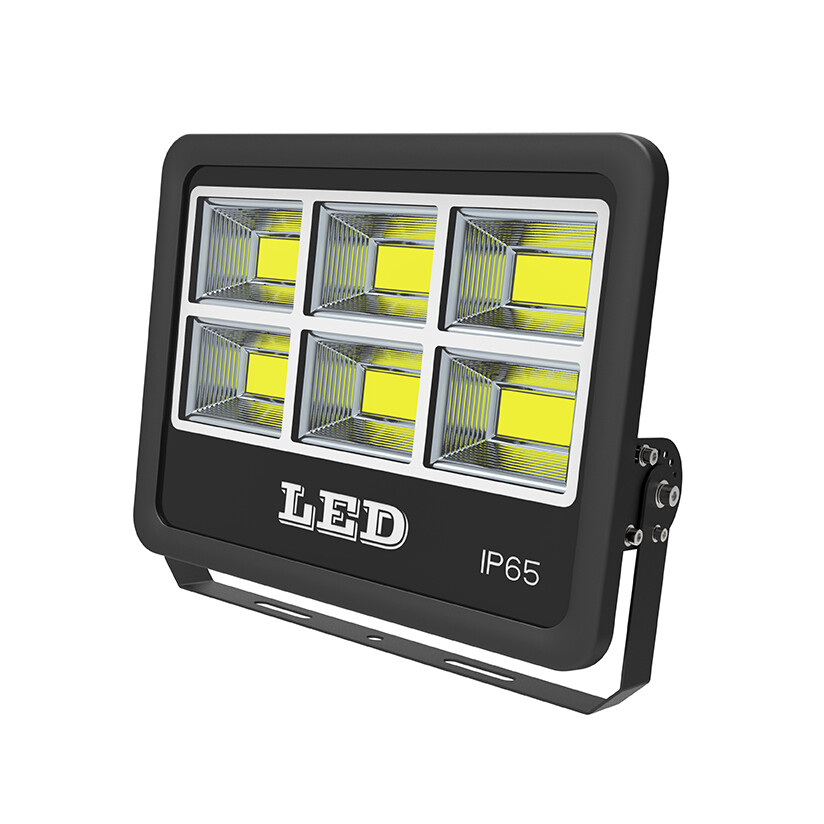
When a yard, farm, construction site, billboard or roadside plot sits beyond the reach of the grid, trenching cable is rarely the answer. Running mains power across long distances means excavation, conduit, permits, cable losses and an electrician on site — costs that often exceed the lighting itself. Solar flood lights solve that problem by putting the energy source, storage and light engine into a single outdoor-rated fixture. BLUESWIFT (Guangzhou Blueswift Electric Co., Ltd.) manufactures all-in-one solar flood lights with motion-sensor models, with a white-light LED output and no wiring required at installation. For distributors, wholesalers, contractors, municipalities and project buyers, that combination means faster deployment, lower civil works, and a product line that answers real demand in markets where grid power is unavailable, unreliable or simply too expensive to extend.
Why All-in-One Solar Flood Lights Win on Off-Grid Projects
An all-in-one design integrates the solar panel, battery and LED into one fixture housing. There is no separate panel bracket to align, no cable run between the panel and the light head, and no external battery box to mount and protect. The installer fixes one unit to a wall, pole, truss or frame, sets the angle, and the light is operational. For contractors working on multi-site rollouts, this shortens labour time per point and removes a whole category of on-site errors.
That simplicity matters most in the places where solar flood lights are typically specified:
- Yards and compounds — residential, commercial and industrial yards that need broad white-light coverage after dark without a new electrical service.
- Farms and agricultural sites — barn approaches, equipment yards, livestock areas, storage compounds and field perimeters where cable runs are impractical.
- Construction sites — temporary and semi-permanent lighting for material yards, gates, scaffolding zones and site offices, where the lighting can be relocated as the project moves.
- Billboards and signage — illuminated advertising structures that need consistent evening light but have no permanent power supply.
- Remote and rural infrastructure — access roads, bus stops, parking areas, market squares and community spaces far from the nearest transformer.
Outdoor durability is the baseline these installations demand. The weather-sealed housing stands up to rain, coastal humidity and dusty job-site conditions, making solar flood lights a practical outdoor fixture rather than a fair-weather accessory.
Because these units need no grid connection, they are also a natural companion to other off-grid and grid-tied ranges in the same catalogue — for example Solar Street Light for road and pathway coverage, and Solar Garden Lights for landscaping and amenity areas. If your project instead has a reliable mains supply and you only need the light engine, the equivalent wired option is covered on our LED Flood Light page.
Solar Flood Lights: Specifications and Product Range
BLUESWIFT supplies solar flood lights including motion-sensor security models with white-light LED output. Confirm the final configuration with our sales team before ordering for a specific site.
- Power options: 30W, 50W, 100W, 150W
- Light colour: white-light LED
- Construction: all-in-one fixture — solar panel, battery and LED integrated in one housing
- Build: weather-sealed housing for permanent outdoor installation
- Installation: no wiring required; mount to wall, pole, truss or frame
- Grid requirement: none — self-contained solar operation
- Certifications: CE and RoHS (certificates available upon request); wider certification documentation also available on request
- Quality control: 100% of fixtures aged and tested under load for 12 hours before packing
- Lead time: typically 15–25 days for standard orders; 25–35 days for OEM and custom configurations
- MOQ: typically 500–1000 pcs; mixed-container quantities negotiable; OEM orders from 1000 pcs
- Payment terms: T/T, L/C, PayPal, Western Union
- Trade terms: FOB, CFR, CIF, EXW, DDP, DDU
- Manufacturer: Guangzhou Blueswift Electric Co., Ltd. — founded 2011 in Guangzhou, China; BLUESWIFT brand in lighting since 2002; 1,000–3,000 sqm factory, 4 production lines; manufacturer and trading company; onsite-checked supplier on Alibaba
That specification set is deliberately narrow and repeatable. Rather than offering dozens of near-identical models, we concentrate production on four wattages that cover the majority of off-grid lighting briefs, which keeps tooling consistent, spare-part supply predictable and pricing factory-direct. For buyers who need container-scale volumes, mixed loads combining several wattages are the normal way to order.
Choosing the Right Wattage for Your Project
Wattage selection for solar flood lights is a question of coverage area, mounting height and required burn hours — not simply "bigger is better". A 150W unit installed at 3 metres on a small residential gate will over-light the area and drain its battery unnecessarily; a 30W unit asked to light a large construction yard at 6 metres will underperform. Match the fixture to the task:
- 30W — compact spaces such as gateways, small yards, signage close-ups, storage sheds, alleys and single-point security lighting.
- 50W — mid-size yards, farm outbuildings, small parking bays, driveways and courtyard lighting where moderate spread is sufficient.
- 100W — larger compounds, construction material yards, farm approaches, workshop aprons and billboard illumination.
- 150W — wide-area coverage: large yards, site entrances, loading areas, market spaces and perimeter lighting where maximum output is required.
Three further factors decide whether the installation performs as expected. First, mounting height and tilt — the solar panel must face the strongest daily sun exposure for the site's latitude, and the light head must be aimed at the target area, not the horizon. Second, daily burn hours — installations that need all-night operation should be specified with that duty cycle in mind from the outset. Third, shading — a panel that spends the afternoon under a tree, wall or roof overhang will under-deliver no matter how large the wattage. Where shading is unavoidable, splitting the load across multiple smaller fixtures frequently outperforms one large unit.
If you are unsure which wattage fits your site plan, send us the area dimensions, mounting height and required operating hours. Our sales team will return recommended wattages and quantities with a factory-direct quotation.
Solar Flood Lights vs Grid-Powered LED Flood Lights
Grid-connected LED flood lights remain the right choice where mains power already exists at the mounting point: they are simple, have no battery to replace, and run indefinitely as long as power is available. The comparison changes as soon as the power source is absent or unreliable.
| Consideration | Solar flood lights (all-in-one) | Grid-powered LED flood lights |
|---|---|---|
| Power source | Self-contained solar panel and battery | Mains supply required |
| Civil works | None — no trenching or conduit | Cable, conduit and electrician required |
| Relocation | Fixture can be moved with the site | Requires re-wiring |
| Operating cost | No electricity draw from the grid | Ongoing energy cost |
| Best fit | Off-grid, remote, temporary, power-unreliable sites | Sites with existing power at the mounting point |
For tenders and distributor catalogues, the two categories are complementary rather than competing. Many of our trade partners stock both: wired LED flood lights for grid-connected projects, and solar flood lights for everything beyond the meter. That dual offering lets a single supplier serve rural electrification programmes, agricultural dealers, construction rental fleets and municipal upgrade projects without quoting from three different factories.
Export, Quality Control and Supply Support
BLUESWIFT has been manufacturing lighting since the BLUESWIFT brand entered the category in 2002 and has operated as Guangzhou Blueswift Electric Co., Ltd. since 2011. Our products are exported to 82 countries, with the largest shares in South America (33%), Southeast Asia (15%), Africa (14%), the Middle East (10%) and Eastern Europe (10%) — markets where off-grid solar lighting is a mainstream specification rather than a niche. We operate four production lines in a 1,000–3,000 sqm factory in Guangzhou, and every fixture is aged and tested under load for 12 hours before it is packed. CE and RoHS documentation is available upon request, along with other certification paperwork where the destination market requires it.
For distributors and wholesalers, we support OEM programmes from 1000 pcs with custom configurations and lead times of 25–35 days, alongside standard orders at 15–25 days. Mixed-container orders are negotiable, and we accept T/T, L/C, PayPal and Western Union under FOB, CFR, CIF, EXW, DDP or DDU terms. Because we sell factory-direct from Guangzhou, pricing is competitive at container volumes without a trading margin layered on top.
Request a Project Quotation for Your Solar Flood Lights Project
Tell us the site, the coverage area and the quantities you need, and we will return recommended wattages and a factory-direct quotation. Whether you are specifying 30W units for a residential compound or 150W units for a construction yard, our team will confirm the right configuration for your market.
Request a Solar Street Light Quote or Chat on WhatsApp with our sales team today:
Email: sales@solarstreetlightmaker.com
WhatsApp: +86-15226566560
Send your project details and we will respond with pricing, lead time and certification documentation for your destination market.